Status: in preparation with the Thailand Mine Action Center (TMAC); seeking funding partners.
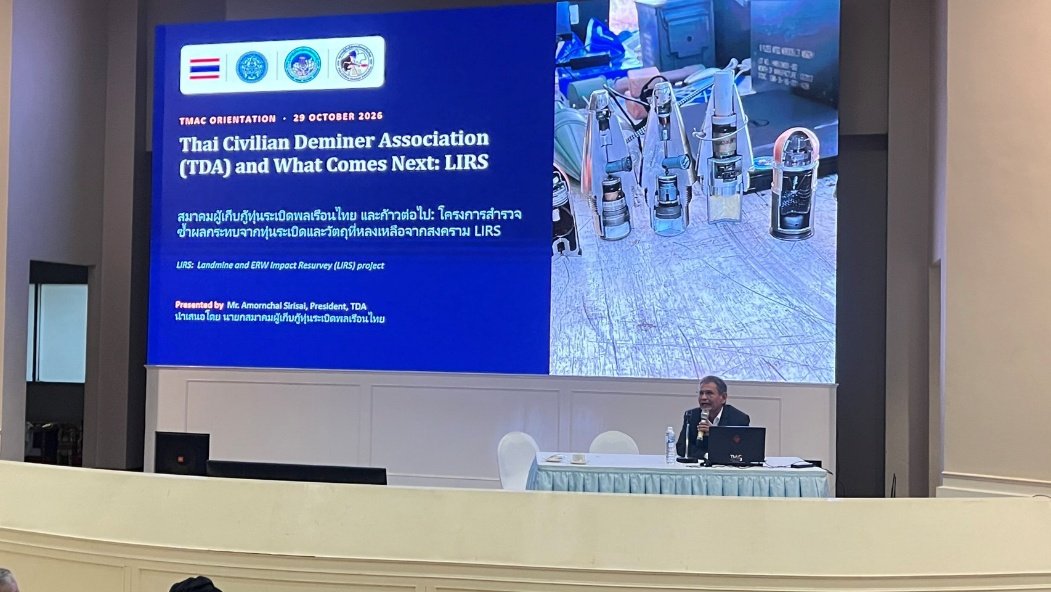
LIRS (Landmine and ERW Impact Resurvey) is a resurvey of landmine and explosive remnants of war (ERW) impact along the Thai–Cambodian border, implemented by TDA under TMAC’s guidance. It will show border communities which areas are still dangerous, and help every agency prioritise clearance where people need it most.
LIRS at a glance
7 provinces
along about 817 km of the Thai–Cambodian border
3 teams · 35 staff
survey teams working under TMAC
12 + 12 months
one year, with a one-year extension
450,000 people
villagers along the border who will benefit
Why resurvey now
The Level One Landmine Impact Survey in 2000 found suspected hazardous areas in 27 provinces. Over 24 years, Thailand has cleared more than 99.5% of them. But the 2025 clashes on the Thai–Cambodian border created new risks from landmines and unexploded ordnance, so the old data is no longer enough for planning.
LIRS runs alongside TMAC’s own work: TMAC clears the confirmed hazardous areas near the border line, while TDA resurveys every border village in the seven provinces to provide up-to-date hazard and impact data.
Our approach: impact-informed NTS
TDA and TMAC agreed to use Non-Technical Survey (NTS) to IMAS 08.10 as the backbone, with a socio-economic impact module added to every village visit. One visit produces both hazard boundaries and data on how people are affected.
- Desk review of existing landmine find records and agency reports.
- Community meetings in every border village in the seven provinces, with drones confirming boundaries from safe ground.
- Impact assessment: casualties, unused farmland, access to forest, water, roads and schools.
- Prioritisation by threat and impact, with quality-checked data entered into TMAC’s IMSMA database.
Who benefits
- About 450,000 villagers along the border will know where the dangerous areas are and how to avoid them, and will receive risk education.
- TMAC and government agencies get up-to-date data to plan and budget clearance.
- Communities where no hazard evidence is found get their land back sooner.
Support LIRS
The two-year budget is about US$1.26 million (about 40.91 million baht), covering field staff, vehicles, drones and survey equipment. TDA keeps its management fee at just 4%. Organisations interested in supporting LIRS, please contact us.